Did you know that reflexology has been the subject of dozens of peer-reviewed clinical studies over the past two decades, looking at everything from chronic pain to PMS to anxiety in surgical patients? The evidence base is smaller than for conventional treatments, but it’s real—and what researchers have actually found is more nuanced and interesting than either enthusiastic believers or hardened sceptics tend to suggest.
Here’s what makes this fascinating: while reflexology has been practised for thousands of years, only recently have scientists begun measuring its effects with the same rigour applied to pharmaceutical trials. The picture that emerges is honest and worth understanding—whether you’re curious, hopeful, or healthily sceptical.
What Modern Research Actually Shows
Let’s cut through the noise and look at what researchers have measured. The strongest evidence so far sits in three specific areas: pain, anxiety, and PMS symptoms.
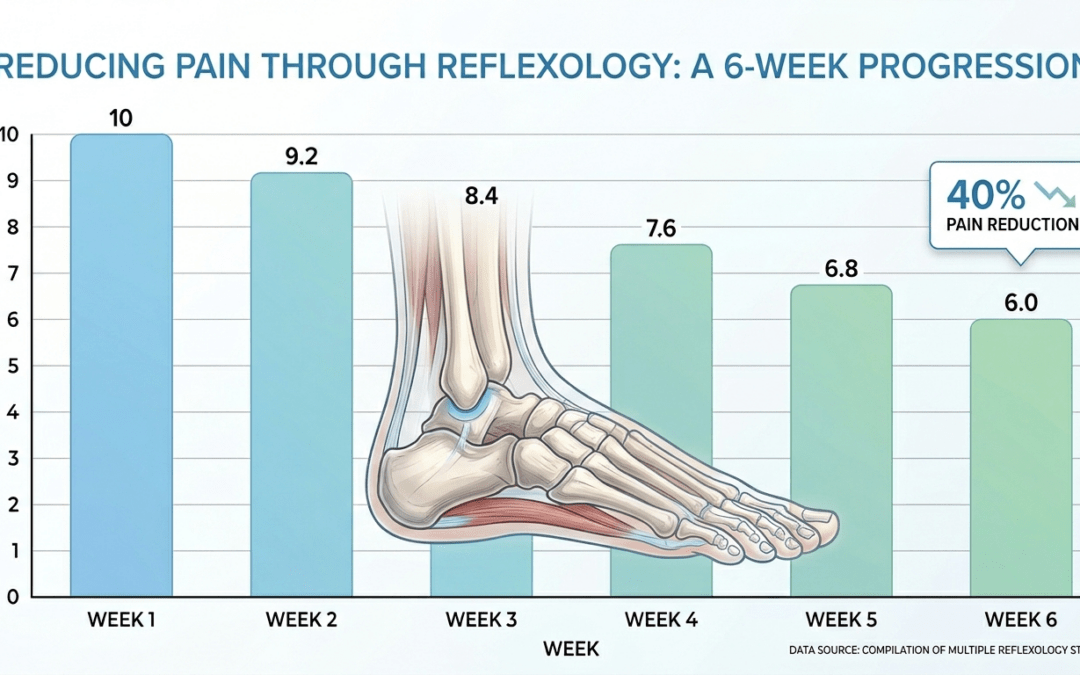
Pain. A 2013 study from the University of Portsmouth, published in Complementary Therapies in Clinical Practice, used a placebo-controlled experimental design with 15 participants and found that reflexology reduced pain perception by around 40% and increased pain tolerance by 45% compared to a sham treatment. While the sample was small, the rigorous design gave it real credibility. Subsequent studies—such as a 2022 quasi-experimental trial of 38 operating room nurses, in which a 30-minute weekly reflexology protocol significantly reduced low back pain over four weeks, and a 2024 randomised controlled trial of 42 ICU nurses, in which weekly foot reflexology over four weeks significantly reduced pain, fatigue and stress—add to this evidence base.
Stress and anxiety. A pilot study in Complementary Therapies in Clinical Practice involving 30 healthy volunteers found that reflexology produced a powerful reduction in state anxiety, along with measurable drops in blood pressure and pulse rate. Interestingly, this same study found no significant change in salivary cortisol or melatonin—a reminder that the science is rarely as tidy as the headlines. A separate 2012 pilot in nursing home residents with cancer did find significant declines in salivary cortisol after both reflexology and Swedish massage, suggesting that hands-on therapies of various kinds can support relaxation in vulnerable populations.
PMS symptoms. This is one of the more robust areas of reflexology research. A 2019 systematic review and meta-analysis pooled data from nine studies covering 475 women with premenstrual syndrome and found that reflexology significantly reduced the severity of PMS symptoms compared to control conditions, with longer sessions producing greater benefit.
These findings point to something real—but they also remind us that reflexology is not a cure-all. For a deeper understanding of how the practice works, explore our complete guide to foot reflexology.
Understanding the Numbers — Real Results vs. Placebo
Here’s where honest science gets interesting. Every well-designed reflexology study includes a control group—usually people who receive a non-specific foot massage that feels similar but doesn’t target specific reflex zones. This is what helps researchers separate the “real” effects from the powerful effects of human touch and relaxation.
The picture that emerges is mixed but illuminating. In some conditions—like PMS, certain pain syndromes, and pre-surgical anxiety—reflexology has consistently outperformed sham treatments. In others, the results are more modest. A 2002 randomised trial of 76 menopausal women, for example, found that reflexology was not significantly more effective than non-specific foot massage in treating psychological symptoms of menopause. A larger 2007 trial of 243 patients with chronic low back pain similarly found no significant difference between reflexology, relaxation, and usual care—although all three groups did experience pain reduction.
Some sceptics argue that this diminishes reflexology’s credibility. Others see it differently: if a person experiences less pain, sleeps better, or feels genuinely less anxious—whether the effect comes from the reflex points, the therapeutic touch, the calm environment, or some combination of all three—the relief itself is real. Most honest researchers acknowledge both readings.
What we do know from neuroimaging is that pressing specific points on the feet produces measurable changes in brain activity. Functional MRI studies have shown that stimulating particular reflex areas activates regions of the primary somatosensory cortex traditionally associated with the body parts those reflex points are said to correspond to—and crucially, this activation occurs whether participants are given accurate or intentionally misleading information about which point is being pressed, suggesting the effect is genuine sensory input, not suggestion. To see exactly how these connections are believed to work, check out our detailed pressure points and their connections.
What This Means for You
So what should you realistically expect if you try reflexology? Most clinical studies on PMS, for example, used six to ten sessions of around 40 minutes each over several weeks to see measurable benefits—though many people report a sense of calm and improved sleep after just one treatment.
Based on the strongest evidence, reflexology appears to work best for:
- Pain reduction in conditions like chronic low back pain, post-surgical pain, and labour
- Anxiety reduction, particularly before medical procedures
- PMS symptoms, both physical and psychological
- General relaxation and improved sleep quality
It’s also worth being clear about what reflexology is not. No credible study claims it cures disease. The research instead positions it as a complementary therapy—something that works alongside conventional medical care to support overall wellbeing. This aligns perfectly with how professional reflexologists like Sonia approach their practice: as partners in your health journey, not replacements for your doctor.
The Bottom Line
The scientific evidence for reflexology is genuine, though more modest than enthusiastic claims sometimes suggest. There are measurable, replicable benefits for certain conditions—particularly pain, anxiety and PMS symptoms—backed by peer-reviewed research. There are also areas where the evidence is weak or mixed, and where benefits seem to come as much from the therapeutic touch itself as from the specific reflex points. The honest reading is that reflexology is a worthwhile complementary therapy, not a miracle cure.
Whether you’re dealing with chronic stress, persistent pain, or simply curious about gentle approaches to wellness, the research suggests reflexology is well worth exploring—with realistic expectations and an open mind. Ready to experience it yourself? Learn what to expect in your first session and discover why so many people in Ireland have made reflexology part of their wellness routine.
Call to book your evidence-based reflexology session today!