Picture this: You’re considering trying Reiki for your chronic headaches, but hesitation creeps in. “Is this some kind of religious practice?” you wonder. “Will it conflict with my beliefs? Or worse—is it just an expensive placebo?”
If these questions sound familiar, you’re not alone. Here in Ireland, many people share these concerns about Reiki and energy healing. The good news? These worries stem from common misconceptions rather than facts.
Today, let’s unravel the truth about Reiki—exploring its actual origins, the science behind energy healing, and what clinical research reveals. By the end, you’ll understand why Reiki requires neither religious conversion nor blind faith to potentially benefit your wellbeing.
Reiki’s True Origins: A Healing Practice, Not a Religion
Here’s what might surprise you: Reiki was never intended as a religious practice. When Mikao Usui developed this healing system in early 20th century Japan, he created something deliberately accessible to everyone, regardless of their spiritual beliefs.
Think of it this way—just as yoga originated in Hindu tradition but is now practiced worldwide by people of all faiths (or none), Reiki transcended its cultural origins to become a universal healing modality. The practice focuses on channeling universal life energy (“ki” or “chi”), a concept found across numerous cultures and healing traditions.
Reiki practitioners don’t worship any deity or follow religious doctrines. There are no required belief systems. The only “belief” involved is an openness to the possibility of healing—the same openness you’d bring to any therapeutic session.
This secular nature makes Reiki perfectly compatible with conventional medical care. Just as you wouldn’t consider physiotherapy or acupuncture religious, Reiki simply offers another complementary approach to wellness. Want to understand more about how these therapies work together? Discover how complementary therapies support conventional medicine without replacing your doctor’s care.
Understanding Energy Principles: Science Meets Ancient Wisdom
“But how can energy healing work without religious faith?” This question reveals another misconception—that energy medicine requires supernatural belief. Actually, the concept of human biofields has gained serious scientific attention.
Your body generates measurable electromagnetic fields. Your heart produces the strongest field, detectable several feet from your body. Your brain generates electrical activity measured by EEGs. Even your cells communicate through electromagnetic signals. This isn’t mysticism—it’s biology.
Reiki practitioners work with these subtle energy fields, similar to how acupuncturists work with meridians or massage therapists work with muscle tension. The practice involves:
- Detecting energy imbalances through developed sensitivity
- Channeling universal energy (not personal energy) to support healing
- Facilitating your body’s natural self-healing mechanisms
- Creating deep relaxation that allows restoration
Modern physics shows us that everything is energy vibrating at different frequencies. Reiki simply applies this understanding practically. While we don’t fully understand the mechanisms yet, emerging research in biofield therapies offers fascinating insights. Curious about the latest findings? Explore the scientific evidence behind holistic therapies and judge for yourself.
Clinical Evidence: What Research Really Shows
Now for the million-euro question: “Is Reiki just an elaborate placebo?” The answer is more nuanced than a simple yes or no.
Multiple clinical trials have examined Reiki’s effects, with interesting results:
- Pain reduction: Studies show significant decreases in pain scores, beyond placebo effects
- Anxiety relief: Measurable reductions in anxiety markers and stress hormones
- Improved sleep: Documented improvements in sleep quality and duration
- Enhanced recovery: Faster healing times in post-surgical patients
A fascinating aspect? Reiki shows positive effects even in skeptical participants and unconscious patients—challenging the pure placebo explanation. Distant Reiki studies, where practitioners work remotely, have also shown statistically significant results.
However, let’s be transparent: research quality varies, and more rigorous studies are needed. The medical community remains divided. Yet thousands of hospitals worldwide now offer Reiki, including major institutions in Ireland, suggesting practical benefits beyond placebo.
The key insight? Whether Reiki works through biofield interactions, deep relaxation, or other mechanisms, many people experience real, measurable benefits. And unlike medications, there are no harmful side effects to worry about.
Your Reiki Experience: What Actually Happens
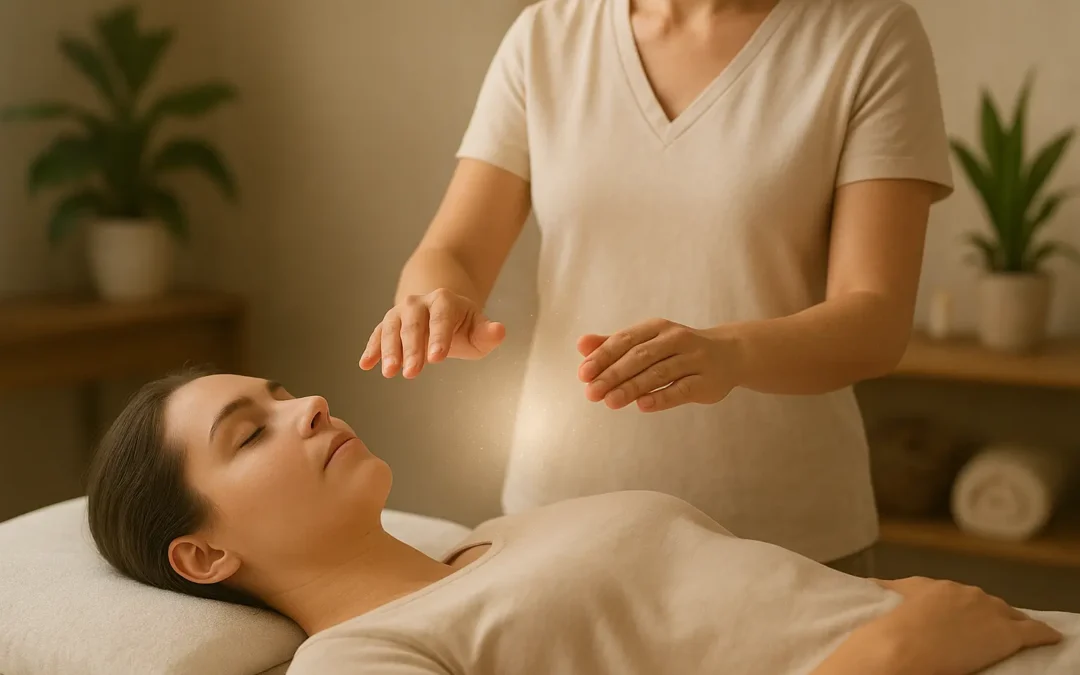
So what actually happens during a Reiki session? No prayers, no religious symbols, no required beliefs. You simply lie fully clothed on a treatment table while the practitioner places their hands lightly on or above your body. Most people experience deep relaxation, warmth, and a sense of peace.
Will you feel energy moving? Maybe. Some do, some don’t. Your experience is valid either way. What matters is how you feel afterward—more relaxed, balanced, or pain-free.
Ready to explore more myths about holistic therapies? Return to explore more holistic therapy myths and discover the truth behind common misconceptions.
Remember: Reiki complements but never replaces medical care. Always consult your healthcare provider for medical concerns.