Have you ever felt your heart racing uncontrollably, breath coming in short gasps, while the world seems to spin around you? If you’re nodding yes, you know the terrifying reality of panic attacks. But what if the path to fewer of these episodes—and gentler ones when they do arrive—begins quite literally beneath you?
As someone who’s helped countless clients find calm through reflexology here in Ireland, I’ve seen something quietly remarkable: when the nervous system is regularly soothed and supported, panic begins to lose much of its grip. Reflexology isn’t a magic switch you flip mid-attack; it’s a steady, restorative practice that helps your body remember what calm feels like, so panic has less room to take hold in the first place.
How Reflexology Helps Prevent Panic Attacks
Panic attacks rarely come from nowhere. More often, they’re the visible peak of weeks or months of accumulated stress, shallow breathing, poor sleep, and a nervous system stuck in a state of chronic alert. Reflexology meets this reality at its root.
By gently working the feet, reflexology helps activate your parasympathetic nervous system—the “rest and digest” mode that’s the natural counterweight to fight-or-flight. Regular sessions train your body to drop more easily into this calmer state, which over time raises your threshold for panic. Situations that once felt overwhelming begin to feel more manageable, and the body stops bracing for the next storm.
The benefits build with consistency. Many clients describe sleeping more deeply within the first few sessions, then noticing that everyday tension takes longer to build, and finally—often without realising exactly when it happened—going weeks without an attack. Pairing reflexology with reflexology and breathwork techniques deepens this effect, giving your body two reliable, complementary ways back to calm.
What reflexology offers is not a quick fix, but something more valuable: a gradual recalibration of the nervous system, so the conditions that produce panic become rarer over time.
Grounding Through Your Feet: Earth Connection Techniques
Your feet are your direct connection to the earth – use them! Here’s what makes grounding through reflexology so powerful:
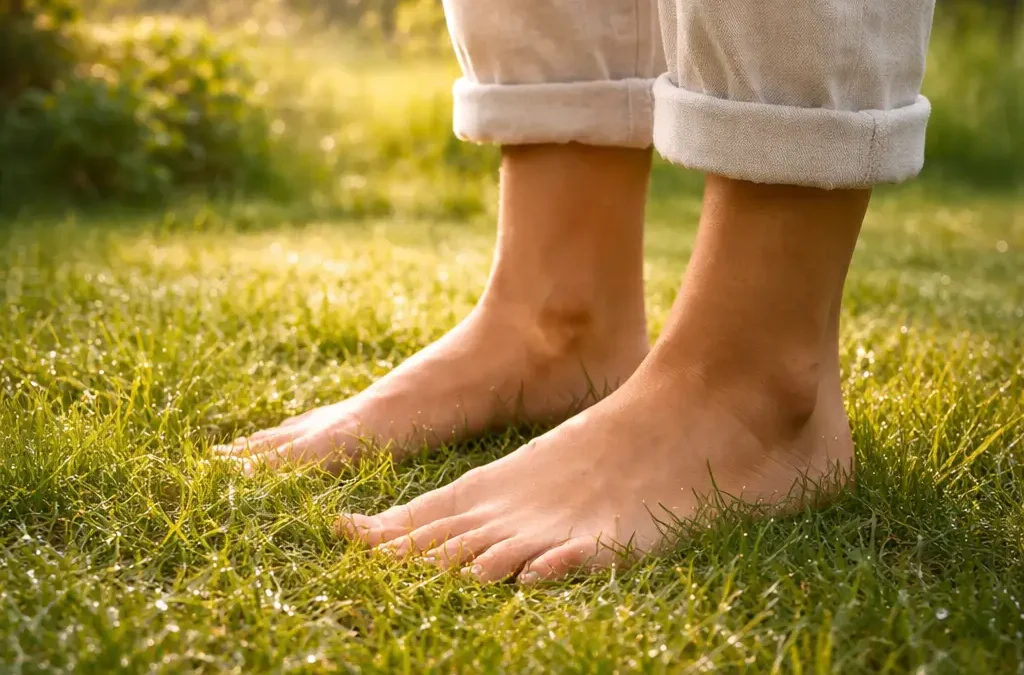
Barefoot Grounding: Remove your shoes and socks. Feel the texture beneath your feet – carpet, grass, or floor. This sensory input interrupts panic’s mental loop.
Temperature Therapy: Alternate between warm and cool surfaces. This temperature contrast brings your awareness fully into your body, away from racing thoughts.
Pressure Walking: Slowly walk while consciously pressing each part of your foot into the ground. Start with your heel, roll through your arch, and push off with your toes. This mindful movement combines grounding with gentle reflex stimulation.
The 5-4-3-2-1 Foot Technique: Name 5 things your feet can feel, 4 sounds you hear, 3 things you see, 2 scents you notice, and 1 taste. This grounds you in the present moment while keeping focus on your feet.
Important Considerations and What to Do
Reflexology is a powerful complementary therapy, but it isn’t a replacement for medical or psychological care. If panic attacks are frequent, severe, or interfering with your daily life, please speak with your GP or a mental health professional. Reflexology works best alongside that wider support, not instead of it.
A few things worth knowing before you begin:
Choose a qualified practitioner. Look for a reflexologist trained and registered with a recognised professional body. Mention upfront that you’re seeking support for anxiety or panic—an experienced practitioner will tailor sessions accordingly and check in with you gently throughout.
Be patient with the process. Reflexology works gradually. A single session might leave you feeling deeply relaxed, but the deeper benefit—a more resilient, less reactive nervous system—comes from regular treatment over weeks and months. Think of it as training, not treatment.
Notice what your body is telling you. Many people who experience panic attacks have spent years overriding their body’s signals. Reflexology can bring those signals back into focus, sometimes surfacing emotions or sensations that have been pushed aside. This is part of the healing, not a setback—and a good practitioner will help you navigate it.
If a panic attack happens between sessions, return to your grounding techniques first. Then, once you’re calm again, use a quick calm routine to help your nervous system fully reset, rather than carrying residual tension into the next day.
The goal isn’t to never feel anxious again. It’s to build a body—and a life—in which anxiety no longer dominates.
Your Journey to Lasting Calm
Living with panic attacks can feel isolating, as though your own body has become unpredictable. Reflexology offers something different: a structured, hands-on way to rebuild trust with your nervous system, gently and over time.
Every person’s anxiety has its own shape, which is why personalised treatment matters so much. In my practice, I’ve watched clients move from feeling braced for the next attack to feeling genuinely settled in their own bodies—often surprising themselves with just how much steadier life can feel.
Ready to explore how reflexology can transform your relationship with anxiety? Discover the full spectrum of comprehensive reflexology for stress and anxiety and take the first step toward lasting calm. Call today for your free 15-minute consultation!