Have you ever caught yourself rubbing your neck during a long workday, wondering if this tension has become your permanent companion? You’re not alone. Here in Ireland, whether you’re commuting through Dublin traffic, working from your kitchen table, or simply dealing with our damp weather, neck and shoulder pain has become an unwelcome part of modern life.
But what if I told you that relief might be found in an unexpected place – your feet?
That’s where reflexology comes in. This ancient practice recognizes that specific points on your feet and hands correspond to different areas of your body, including that troublesome neck and shoulder region. Think of it as having a map of your entire body right at your fingertips (or should I say, toe-tips?).
Understanding Your Neck and Shoulder Reflex Zones
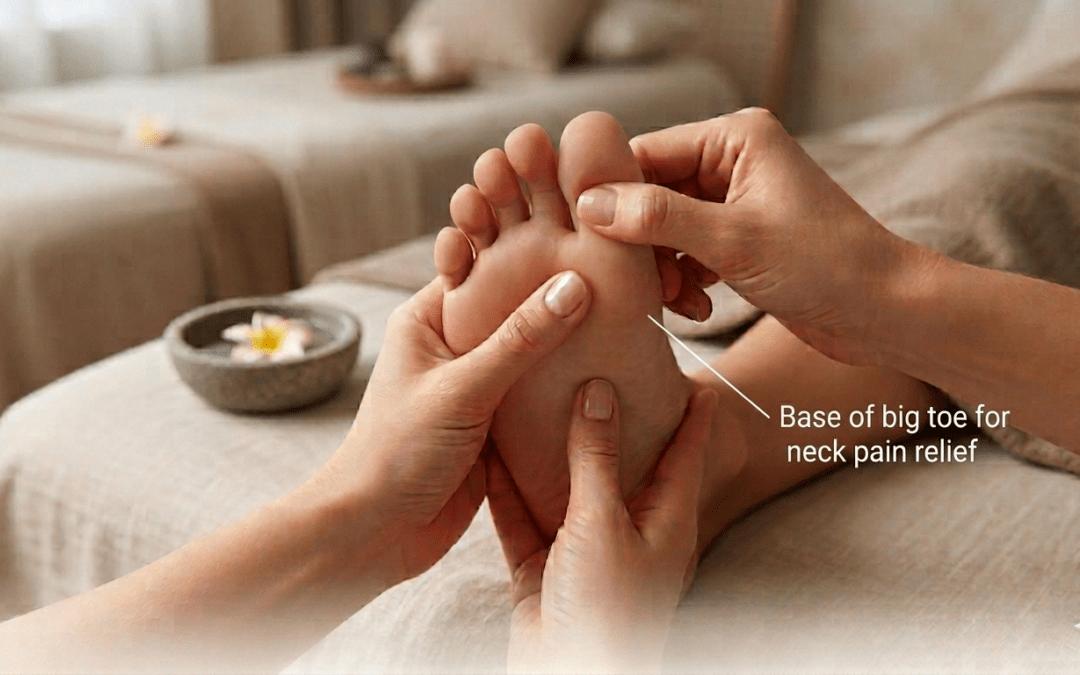
The fascinating thing about reflexology is how precisely our feet mirror our body’s structure. Your big toe, for instance, represents your head area. The base of your big toe specifically corresponds to your neck and around the inner side, the cervical spine – those seven crucial vertebrae that support your head and allow all that movement we take for granted.
Moving along the foot, the area just below your little toe connects to your shoulder and trapezius muscles. These reflex points, when properly stimulated, can help release tension that’s been building up from hours of computer work or stress-induced muscle tightness.
On your hands, similar connections exist. The base of your thumb relates to your neck area, while the fleshy area between your thumb and index finger corresponds to shoulder tension. Understanding these connections is the first step in your comprehensive pain relief through reflexology journey.
What makes these reflex zones particularly powerful is their ability to influence not just physical tension, but also the energy flow throughout your upper body. When these points are blocked or tender, it often indicates tension or imbalance in the corresponding body area.
Simple Techniques You Can Try at Home
Ready to give yourself some relief? Here are some gentle techniques you can try right now:
For Neck Tension:
- Thumb Walking on Big Toe: Using your thumb, make small caterpillar-like movements around the base of the big toe. Spend extra time on any tender spots.
- Rotate and Flex: Gently rotate your big toe in circles, then flex it back and forth. This helps stimulate all the neck reflex points.
For Shoulder Relief:
- Pressure Point Massage: Find the area just below your little toe on the top of your foot. Apply gentle, circular pressure for 30 seconds.
Remember, reflexology should feel good – tender perhaps, but never painful. Listen to your body and adjust pressure accordingly. These techniques work best when practiced regularly, even just five minutes daily can make a noticeable difference.
When Professional Treatment Makes the Difference
While self-care techniques are wonderful, there’s something transformative about professional reflexology treatment. As a trained reflexologist, I can detect subtle imbalances you might miss and apply precise pressure that goes deeper than self-massage allows.
During a professional session, we don’t just focus on isolated reflex points. We work with your entire foot, understanding how neck and shoulder tension often connects to other areas – stress patterns, digestive issues, or even old injuries. This holistic approach means we’re not just treating symptoms; we’re addressing root causes.
Many of my clients in Kilcullen and surrounding areas come in with chronic neck pain that hasn’t responded to conventional treatments. Through regular reflexology sessions, they’ve discovered not only pain relief but also better sleep, reduced headaches, and improved overall wellbeing. It’s particularly effective when combined with treating related conditions like migraine and headache relief points.
Supporting Your Healing Journey
True healing happens when we support our body in multiple ways. Alongside reflexology, consider your daily habits. Are you holding your phone between your ear and shoulder? Is your computer screen at eye level? Small adjustments can amplify the benefits of your reflexology treatments.
Stress management plays a crucial role too. Our shoulders often carry our emotional burdens – it’s no coincidence we talk about “bearing the weight of the world on our shoulders.” Combining reflexology with mindfulness or gentle movement can create lasting change.
Remember, persistent pain deserves attention. While reflexology offers wonderful support, always consult your healthcare provider for ongoing concerns.
Curious about how reflexology can help with other types of pain? Discover how these same principles apply to lower back and sciatica relief – you might be surprised by the connections throughout your body.