Have you ever wondered if there’s actual science behind reflexology, or if it’s just relaxing foot work with good marketing? You’re not alone. When chronic pain disrupts every aspect of life, it’s natural to question whether pressing points on your feet could genuinely make a difference. The honest answer is more interesting than either enthusiasts or sceptics tend to suggest: the research is real, but it’s also more modest and more nuanced than headlines often imply.
What the Numbers Actually Tell Us
Let’s cut through the noise and look at what researchers have actually measured. One of the most-cited studies comes from the University of Portsmouth in 2013, published in Complementary Therapies in Clinical Practice. Using a placebo-controlled experimental design with 15 participants, Dr. Carol Samuel found that reflexology reduced pain perception by around 40% and increased pain tolerance by around 45% compared to a sham TENS treatment. The sample was small, but the rigorous design gave the findings genuine credibility, and they remain widely referenced today.
For chronic conditions, the picture is more mixed. Smaller well-designed trials—such as a 2018 randomised controlled trial of 60 rheumatoid arthritis patients in Turkey, which found that six weeks of foot reflexology significantly reduced pain and improved Pittsburgh Sleep Quality Index scores compared to a control group—suggest real benefit. Other trials, like a 2007 UK pragmatic study of 243 patients with chronic low back pain, found no significant difference between reflexology, relaxation, and usual care, even though all three groups experienced pain reduction.
For migraine, a 2025 randomised controlled trial published in Annals of Medicine and Surgery studied 75 patients in Iran, comparing reflexology plus drug therapy, sham plus drug therapy, and drug therapy alone. The reflexology group experienced significant reductions in the duration and severity of migraine attacks, although the frequency of attacks didn’t differ significantly between groups. An earlier 2018 pilot study with 48 women suffering from migraine found that both reflexology and segmental massage reduced pain intensity, frequency and duration of attacks, with effects still measurable three months after treatment.
What this body of research suggests isn’t a miracle cure—it’s something more honest and arguably more useful: real, measurable improvements in specific symptoms, particularly the experience of pain, when reflexology is used consistently. For more on how this applies to your situation, our comprehensive guide to reflexology for pain relief walks through the practical implications.
Beyond the Lab: Real-World Applications
Research is one thing, but how does this translate to your Tuesday afternoon appointment? The studies reveal some interesting patterns.
Migraine sufferers seem to benefit most when reflexology is used as a complementary approach alongside medical care—reducing the duration and intensity of attacks, with mixed results on attack frequency depending on the study. This makes particular sense when working with specific reflexology points for migraines and headaches, where consistent treatment over several weeks may help interrupt the tension patterns that often contribute to attacks.
Rheumatoid arthritis patients report something equally valuable in the research: not just less pain, but improved sleep quality and reduced fatigue. A 2024 systematic review of four trials covering 206 rheumatoid arthritis patients concluded that reflexology was effective in reducing pain in three of the four studies reviewed. A 2016 randomised trial in Turkey, comparing reflexology, aromatherapy massage and a control group in 51 RA patients, found that pain and fatigue scores significantly decreased in both intervention groups, with reflexology beginning to reduce pain scores from week one onwards.
Post-surgical and chronic pain populations also appear in this body of research. A 2023 meta-analysis on patients recovering from laparoscopic gallbladder surgery found that foot massage was associated with significantly lower post-operative pain scores at multiple time points, along with a substantially reduced need for additional pain medication.
What strikes me most is how consistent the broad pattern is across populations: the magnitude of benefit varies, but the direction is generally positive—particularly for pain, fatigue, sleep, and the felt experience of being supported through a difficult condition.
Understanding the Science Without the Jargon
So what’s actually happening when someone presses on your big toe? The honest answer is that researchers don’t yet fully understand the mechanism, but several plausible theories are converging.
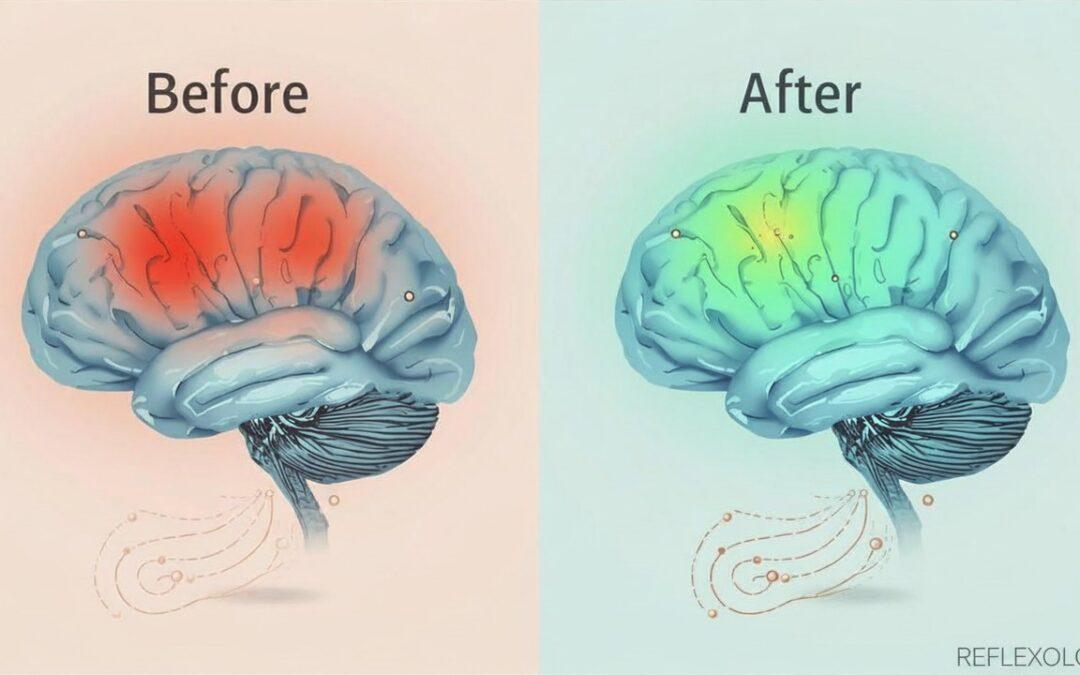
The most robust evidence comes from neuroimaging. Functional MRI studies have shown that stimulating specific reflex areas on the feet activates regions of the primary somatosensory cortex traditionally associated with the body parts those reflex points are said to correspond to—and this activation occurs whether participants are given accurate or intentionally misleading information about which point is being pressed, suggesting the brain is responding to genuine sensory input rather than simply to suggestion.
Beyond direct brain activation, there’s a broader and well-established mechanism at work: the parasympathetic relaxation response. Reflexology consistently produces measurable drops in subjective stress, blood pressure and pulse rate. Since chronic pain is significantly modulated by the nervous system’s overall state of arousal, anything that reliably calms that system may also dampen the pain signal. Imagine your nervous system as a busy switchboard—reflexology appears to reduce the overall noise, making it easier for genuine repair signals to get through.
This isn’t replacing medical care. It’s giving your body additional, gentle tools to work with.
Making Informed Choices
The evidence suggests reflexology works best as part of a comprehensive approach to chronic pain. The most successful study participants combined sessions with conventional medical care, gentle exercise, and stress management. They also asked practitioners about experience with their specific conditions and kept their doctors informed about what they were trying.
If you’re considering reflexology for chronic pain, the research supports giving it a genuine try. Most studies that show measurable benefits used six to ten sessions over several weeks—suggesting that consistency matters more than intensity. Whether you’re dealing with daily discomfort or looking for additional support alongside conventional treatment, exploring arthritis and joint pain reflexology techniques might be a good next step toward feeling more like yourself again.