Have you ever wondered if there’s actual evidence behind those gentle foot techniques that seem to soothe crying babies? As a parent considering reflexology for your little one, you’re absolutely right to ask the question. When it comes to our children’s wellbeing, anecdotes alone aren’t enough—we want to know what the research actually shows, and where the limits of that knowledge lie.
The honest answer is encouraging, but nuanced. A growing body of small-scale studies has begun to explore reflexology for babies and children, with results that are quietly promising. Let’s look at what the research currently supports—and what it doesn’t—so you can make a properly informed decision for your family.
What Current Research Tells Us
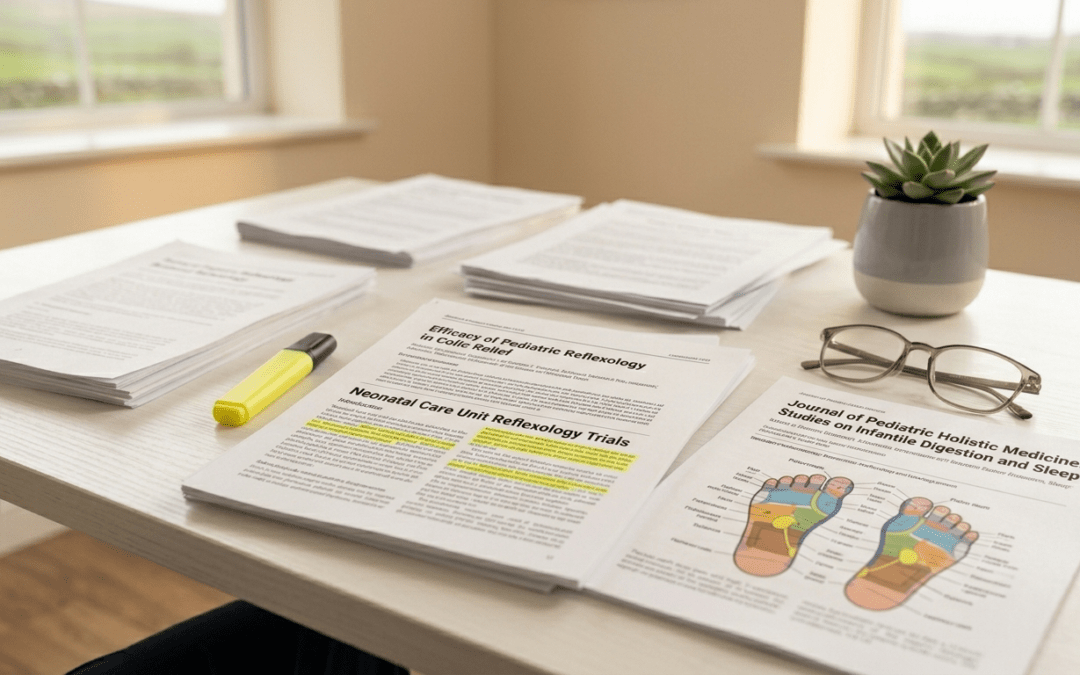
Recent years have seen genuine scientific interest in reflexology for children, particularly in the area of infant colic. In a 2018 study published in The Journal of Alternative and Complementary Medicine, researchers Icke and Genc followed 64 babies diagnosed with infantile colic, divided into a study group of 31 and a control group of 33. Reflexology was applied two days a week for three weeks, and the babies in the study group showed significantly lower scores on the Infant Colic Scale compared to those in the control group.
A separate 2021 randomised, placebo-controlled trial published in Complementary Therapies in Clinical Practice studied 45 infants diagnosed with infantile colic. The reflexology group received four 20-minute sessions over a two-week period, and the results showed significantly lower scores for both daily crying duration and overall colic symptoms compared to a placebo touch group.
Think of it this way: just as we instinctively rub a child’s back when they’re upset, reflexology works with similar principles—but with more precision and structure. A 2020 systematic review examining six randomised controlled trials covering 277 infants and children found that reflexology had positive effects in infancy for relieving colic symptoms, regulating heart rate, increasing oxygen saturation, and reducing neonatal abstinence symptoms. The review also noted improvements in spasticity and motor skills in children with cerebral palsy.
What’s reassuring about these findings is their focus on measurable outcomes rather than impressions—researchers tracked specific markers like crying duration, heart rate, and oxygen saturation. For parents dealing with infant colic and reflux relief, these studies offer cautious, evidence-based hope.
Safety, Standards and Irish Professional Practice
In Ireland, reflexologists working with babies and children operate within a clear professional framework. The Irish Reflexologists’ Institute (IRI), established in 1985, is the self-regulating membership body that represents and promotes reflexology in Ireland, maintaining standards through advanced postgraduate courses and a register of qualified practitioners. Practitioners working with anyone under sixteen are expected to follow the Children First Act 2015 and national safeguarding policies, and to obtain prior consent from a parent or guardian, with a third party present during the session.
Working specifically with babies and young children also requires specialist postgraduate training beyond a standard reflexology diploma. In practice, this means qualified practitioners follow well-established safety principles, including:
- Using extremely light pressure—far gentler than adult sessions
- Keeping sessions short, typically only a few minutes for newborns and gradually longer for older babies and children
- Always obtaining informed parental consent, with a parent present throughout
- Adapting techniques to the child’s age, development and mood on the day
- Recognising clearly when a child should be referred to medical professionals
Paediatric reflexology requires specialist training because it isn’t simply a gentler version of adult treatment—it calls for an understanding of infant physiology, contraindications, and how to read non-verbal cues from a pre-verbal client. For parents wanting to understand exactly what a session looks like and how to prepare your child, the complete parent’s guide walks through the whole process step by step.
What the Evidence Tells Us—and What It Doesn’t
Let’s be honest about the state of the science. While the available studies show promising results for specific issues like colic, the research base remains relatively small. Reviewers themselves note that the absence of standardisation, inadequate use of study protocols, and heterogeneity of the data mean that more well-structured trials are still needed. Reflexology is best understood as a complementary approach—working alongside conventional paediatric care rather than replacing it.
That said, the existing evidence is consistent on a few important points. Across multiple studies and reviews, researchers have found:
- Significant reductions in crying time and colic severity in infants who received reflexology
- Improvements in physiological markers such as heart rate and oxygen saturation in neonates
- No adverse events reported across the randomised controlled trials reviewed
- A strong sense of relaxation and wellbeing reported by parents, often alongside calmer, more settled babies
Researchers remain appropriately cautious, calling for larger and more robust studies. But what we do have suggests that, when performed by a properly trained practitioner following established safety guidelines, reflexology is a safe and gentle option well worth considering.
Moving Forward with Confidence
The combination of emerging research and established professional standards offers reassuring news for parents considering reflexology for their child. While we’re still learning exactly how and why these gentle techniques work, the evidence so far supports what many families have observed firsthand—reflexology can be a quietly valuable addition to your child’s wellness toolkit.
The best approach combines professional expertise with your own parental instincts. If you’re curious about how reflexology might help your little one, why not explore baby and child reflexology options? Armed with honest research and guided by recognised professional standards, you can make a decision that feels truly right for your family.
Ready to learn more? Book a free 15-minute consultation to discuss how evidence-based reflexology might support your child’s wellbeing. Call today to schedule your chat!