Understanding the Synergy Between Reflexology and EAPs
Traditional EAPs excel at providing psychological support, but what happens when stress manifests physically? That’s the fascinating gap reflexology fills. By working with pressure points on the feet that correspond to different body systems, reflexology addresses the physical manifestations of workplace stress that counselling might miss.
This complementary approach recognises that wellbeing isn’t just mental—it’s a delicate dance between mind, body, and spirit. When employees receive both counselling support and reflexology treatments through their corporate reflexology services, they’re addressing stress from multiple angles. It’s like having both a map and a compass for navigating workplace challenges.
The beauty lies in how these services enhance each other. A counselling session might help an employee understand their stress triggers, while a reflexology treatment helps release the physical tension those triggers create. Together, they form a more complete wellness solution.
Evidence-Based Benefits for Mental Health Support
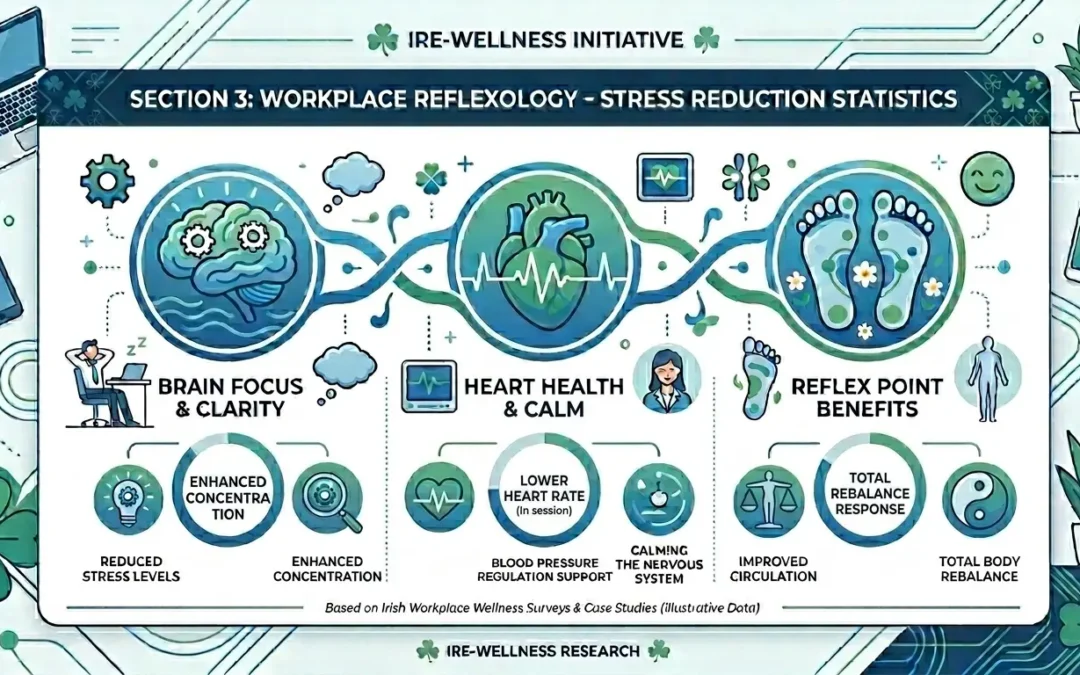
Let me share something that might surprise you: research shows that reflexology can reduce cortisol levels—our primary stress hormone—by up to 31%. But beyond the numbers, what does this mean for your employees?
Immediate stress relief is just the beginning. Regular reflexology sessions have been shown to:
- Improve sleep quality (crucial for mental resilience)
- Reduce anxiety symptoms
- Enhance mood and emotional balance
- Boost immune function
- Increase energy levels naturally
These aren’t just feel-good benefits—they translate directly into measurable improvements in productivity and reduced absenteeism. When employees feel better physically, they’re more equipped to engage with the psychological support your EAP provides. It’s a virtuous cycle of wellness.
Practical Integration Strategies
So how do you actually bring reflexology into your existing EAP framework? Here’s what works:
Start with a pilot program. Choose a small group of employees—perhaps those already engaged with EAP services—and offer complementary reflexology sessions. Track their feedback and wellness metrics over two months.
Communication is key. Frame reflexology as a complement to, not a replacement for, existing services. Use language that emphasises evidence-based benefits and professional standards. Remember, in Ireland, qualified reflexologists like those at Holistic Sonia are registered with professional bodies and treatments can often be claimed through health insurance.
Consider scheduling flexibility. Offer sessions during lunch hours or as part of wellness days. Some companies find success with monthly on-site visits, while others prefer voucher systems for off-site treatments.
Train your EAP counsellors to understand reflexology’s benefits so they can recommend it when appropriate, creating a truly integrated approach.
Making It Work for Your Organisation
The most successful integrations happen when companies view reflexology not as an add-on, but as an integral part of their holistic wellness strategy. Start by surveying employee interest and stress levels. Use this baseline to measure the impact after implementation.
Ready to explore how reflexology could enhance your EAP? Discover our tailored reflexology package options designed specifically for corporate wellness programs. Your employees—and your bottom line—will thank you.