
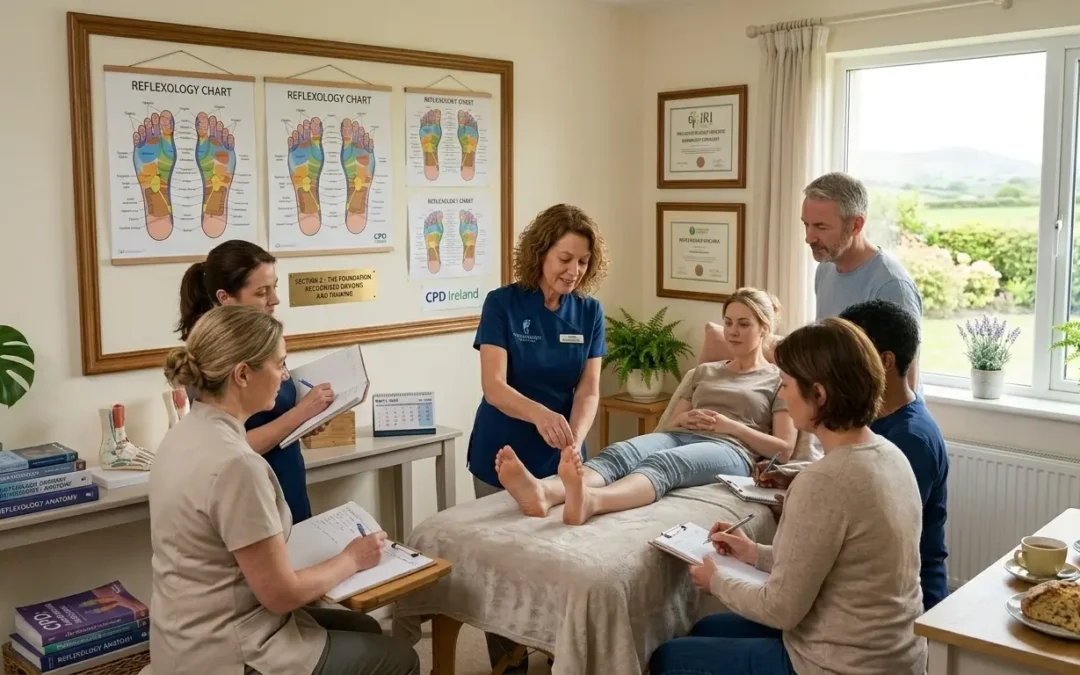
When you’re entrusting someone with your health and wellbeing, wouldn’t you want to know they’ve had proper training? The good news is that Ireland actually has clear professional standards for reflexology that protect you as a client.
I’ve created this straightforward checklist to help you identify truly qualified reflexologists. Whether you’re seeking treatment for stress, chronic pain, or simply better sleep, knowing what credentials to look for can make all the difference in your results—and your safety.
The Foundation: Recognised Diplomas and Training
A reflexologist’s journey begins with comprehensive education. Professional reflexology diploma in Ireland require a minimum of 100-150 hours of supervised training.
Here’s what proper training includes:
- In-depth anatomy and physiology studies
- Understanding of all body systems and their reflex points
- Extensive practical experience with case studies
- Knowledge of contraindications and safety protocols
- Professional ethics and client care standards
The most respected programmes are those recognised by the Irish Reflexologists’ Institute, IRI and the National Register of Reflexologists Ireland NRRI. These courses offer a full qualification and a certified diploma, and ensure practitioners acquire the right knowledge to carry out this activity. This is especially important when choosing the right reflexologist in Kildare or anywhere in Ireland, as properly trained practitioners can adapt treatments to your specific needs.
Quality training also covers the holistic approach—understanding that your feet mirror your entire body and that emotional wellbeing is just as important as physical health.
Professional Membership: IRI and NRRI
The **Irish Reflexologists’ Institute (IRI) and the National Register of Reflexologists Ireland (NRRI) ** serve as the gold standards for reflexology practice in Ireland. But what does membership actually mean for you as a client?
IRI and NRRI members must:
- Hold recognised reflexology qualifications
- Maintain professional indemnity insurance
- Adhere to a strict code of ethics
- Commit to ongoing professional development
This is where it gets genuinely valuable for clients: IRI and NRRI membership mean your treatments may be eligible for insurance refunds through major health insurance providers. It’s not just about prestige—it’s about tangible benefits that make quality reflexology more accessible.
The Institute also provides a complaints procedure and professional standards monitoring, giving you peace of mind that your practitioner is accountable to a professional body. When you see that IRI membership certificate on the wall, you’re looking at someone who takes their profession—and your care—seriously.
Continuing Professional Development (CPD)
Here’s something that might surprise you: the best reflexologists never stop learning. Continuing Professional Development (CPD) isn’t just a box to tick—it’s what keeps practitioners at the cutting edge of their field.
Professional reflexologists are required to complete a certain number of CPD points annually, undertaking post-graduate training and engaging in other relevant activities. This might include attending conferences, seminars, or specialized courses in reflexology or related therapies.
This ongoing education means your reflexologist can offer you the latest, most effective treatments. Whether it’s new research on reflexology for hormonal balance or advanced techniques for stress relief, CPD ensures your practitioner evolves with the field.
Think of it as the difference between a chef who learned one menu twenty years ago and one who constantly explores new techniques and ingredients. Which restaurant would you choose?
Your Qualification Checklist & Conclusion
Ready to find a qualified reflexologist? Here’s your practical checklist:
✓ Recognised diploma from an accredited training provider
✓ IRI or NRRI membership or equivalent professional body registration
✓ Current insurance coverage for professional practice
✓ Evidence of CPD and specialized training
✓ Clear display of qualifications in their practice space
Remember, a reflexologist will never hesitate to discuss their qualifications. They’re proud of their training and happy to explain how it benefits you.
Ready to experience reflexology with a fully qualified practitioner? Book your session with confidence, but first, make sure you know the red flags to avoid when choosing your reflexologist.