A Quiet Shift in Modern Healthcare
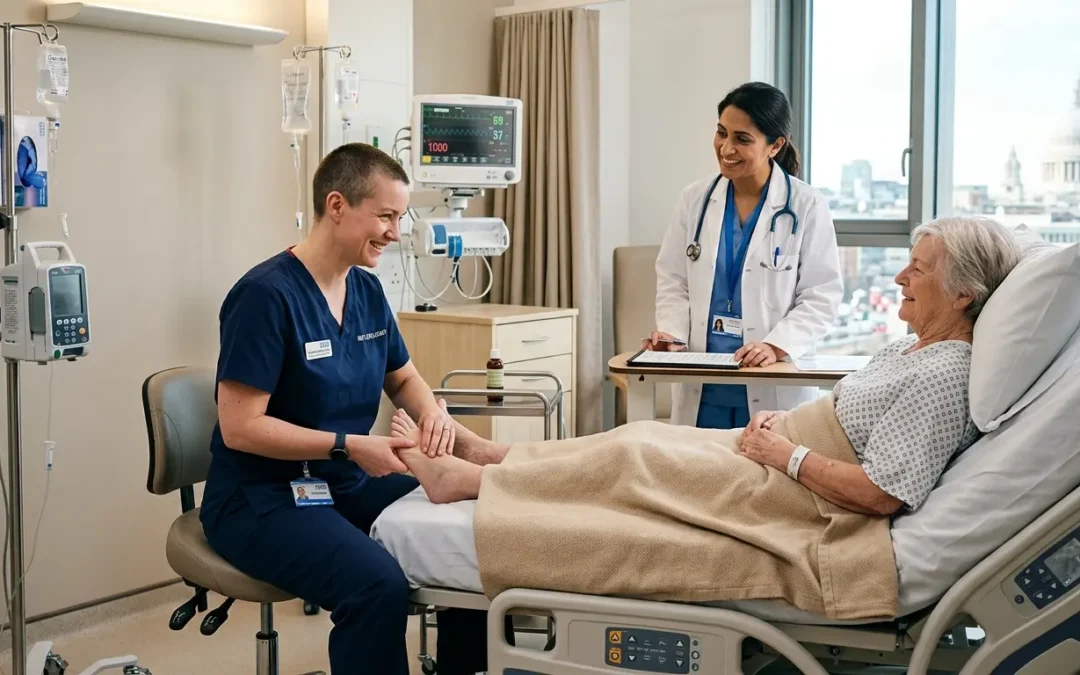
Picture this: you walk into a major teaching hospital and discover that complementary therapies—reflexology, Reiki, acupuncture—are quietly being offered alongside conventional treatment. Sound unlikely? It’s already happening. From cancer support centres in Dublin to research being published in peer-reviewed journals worldwide, gentle hands-on therapies are steadily earning their place beside conventional medicine.
What makes this shift so interesting is its character. These aren’t alternative treatments trying to replace conventional care—they’re complementary approaches working alongside medical teams to help patients feel better, recover more comfortably, and cope more easily with what their bodies are going through. And while the research base is still growing, what we do have is honest, peer-reviewed, and worth taking seriously.
Let’s look at what the evidence actually says—and what it doesn’t.
What the Research on Pain Says
One of the most cited pieces of research in this area is a 2013 study from the University of Portsmouth, published in Complementary Therapies in Clinical Practice. Led by Dr. Carol Samuel, a trained reflexologist conducting the experiment as part of her doctoral thesis, the study used a controlled experimental design in which 15 participants submerged a foot in ice water under two conditions: once after receiving reflexology, and once after a sham TENS treatment they believed was real but which provided no actual stimulation.
The results were genuinely interesting. Participants reported about 40 per cent less pain and were able to tolerate the pain for around 45 per cent longer when they had received reflexology compared to the placebo condition. The sample was small, but the rigorous placebo-controlled design is what gave the findings credibility. The researchers suggested reflexology may work in a similar way to acupuncture, prompting the brain to release chemicals that dampen pain signals.
Beyond Portsmouth, a 2023 meta-analysis published in Surgical Laparoscopy, Endoscopy & Percutaneous Techniques found that foot massage after laparoscopic gallbladder surgery was associated with significantly lower pain scores at 60, 90 and 120–150 minutes post-procedure, along with a substantially reduced need for additional pain medication. Similar benefits have been reported in studies on pain after cardiac surgery and chronic low back pain.
The pattern is consistent: when used alongside conventional care, hands-on therapies appear to help patients experience less pain and rely less heavily on medication. This is exactly why it’s so important to talk to your doctor about complementary therapies—when your medical team knows what you’re using, they can help you integrate it sensibly into your overall care plan.
What the Research on Pre-Surgery Anxiety Says
Facing surgery can be one of the most anxious experiences a person ever goes through. The heart races, sleep gets harder, and the mind keeps circling back to the unknown. A growing body of research has been quietly exploring whether complementary therapies can help calm those pre-operative nerves—and the findings are encouraging.
A study published in 2020 by Bukowski and colleagues followed 210 surgical patients in Turkey, with half receiving pre-operative Reiki and half receiving standard care. While the control group’s anxiety scores rose significantly as surgery approached, the Reiki group’s anxiety levels remained stable—suggesting that Reiki helped prevent the typical pre-operative spike.
More recently, a 2024 randomised controlled trial published in Acta Paulista de Enfermagem studied 88 cardiac surgery patients in a university hospital, with the intervention group receiving two Reiki sessions in the days before surgery. The results showed statistically significant improvements in anxiety, well-being and muscle tension compared to the control group.
A broader 2024 meta-analysis published in BMC Palliative Care, which pooled data from multiple Reiki trials totalling 824 participants, concluded that Reiki therapy had a significant effect in reducing anxiety overall—although the same review noted that results in specifically pre-operative settings have been somewhat mixed, and called for further well-designed studies.
The picture isn’t perfect, but it’s quietly promising. For many patients, Reiki and similar therapies appear to take the edge off the pre-surgery storm, allowing them to enter the operating room a little calmer and more grounded than they otherwise would be.
What This Means for Irish Patients
So how does this international research translate to Irish healthcare? The picture is encouraging, though more nuanced than it might at first appear. Complementary therapies aren’t yet formally integrated into most Irish hospital wards, but they are increasingly available to patients through trusted partner organisations working in close collaboration with hospital teams.
The ARC Cancer Support Centres, founded in 1994 by Professor Des Carney, a leading oncologist at the Mater Hospital, were established specifically to offer holistic, complementary and psychological support to people undergoing cancer treatment and their families. Operating from three Dublin centres and serving over 400 individuals annually, ARC offers reflexology, acupuncture, counselling and peer support, working in tandem with patients’ medical care—a clear example of how complementary therapies can sit alongside conventional treatment.
For Irish patients today:
- Awareness among medical professionals is steadily growing
- Reflexology delivered by registered Irish Reflexologists’ Institute members is recognised by Irish health insurers Laya, VHI and Irish Life, and may be eligible for partial reimbursement subject to your individual policy
- Complementary therapies are most often accessed through patient support charities and community-based practitioners working alongside hospital care, rather than within hospital walls
This shift isn’t happening overnight, but the momentum is real. Understanding Irish regulations and insurance coverage for complementary therapies can help you navigate this evolving landscape and make informed decisions about what might fit into your own care.
Making Sense of It All
The honest summary? The evidence supporting complementary therapies as a partner to conventional medicine is growing—but the field is still maturing. Studies on reflexology, Reiki and related therapies show real, measurable benefits for pain, anxiety and overall wellbeing, particularly when used alongside standard medical care. They aren’t miracle cures, and the research base remains smaller than for conventional treatments. But for many patients, they offer something genuinely valuable: a calmer body, a less anxious mind, and a sense of being supported as a whole person rather than as a single medical issue.
The key takeaway is simple. You don’t have to choose between conventional and complementary care—the most effective approach often combines both, creating a fuller, more integrated path through illness, recovery, or simply through life’s harder moments.
Ready to explore how complementary and conventional medicine can work together? Discover more about understanding complementary vs conventional medicine and how this integrated approach could support your own health journey.