Have you ever noticed how your face seems to tell a story about your health? That persistent breakout on your chin, those tension lines across your forehead, or the puffiness around your eyes – they’re not random occurrences. Think of it this way: your face is like a detailed map of your entire body, with each zone holding clues about your internal wellbeing.
This fascinating connection forms the foundation of facial reflexology, an ancient healing practice that’s finding new appreciation in modern Ireland. As someone who’s witnessed countless transformations through this gentle therapy, I’m excited to share how understanding these facial zones can open doors to better health and deeper self-awareness.
Understanding Facial Reflexology Zones
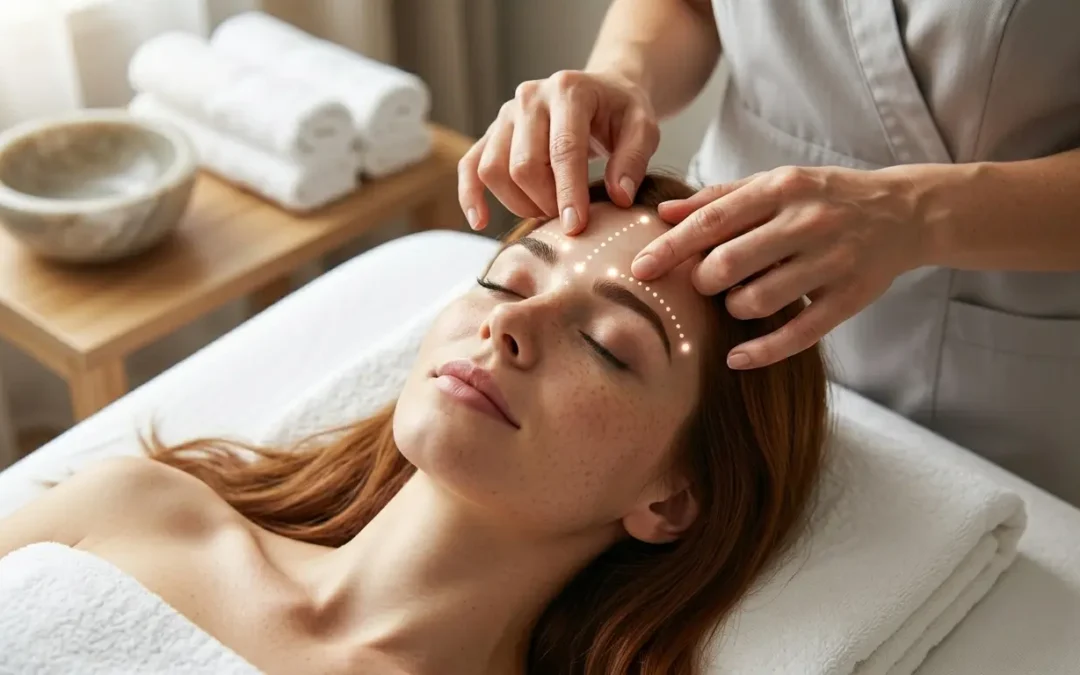
Imagine your face as a sophisticated control panel, where each button connects to different parts of your body. That’s essentially what facial reflexology reveals – a network of reflex points that correspond to your organs, glands, and body systems. Unlike traditional beauty treatments that work purely on the surface, facial reflexology works from the inside out, stimulating your body’s natural healing responses.
The practice recognizes that your face contains over 300 reflex points, each one a tiny gateway to internal balance. When pressure is applied to these specific points, it sends signals through your nervous system, encouraging healing and restoration in the corresponding areas of your body. It’s like having a conversation with your organs through your face – gentle, yet remarkably effective.
What makes this particularly fascinating is how accessible these points are. Your facial reflex points are right there in the mirror, telling their story every day.
Reading Your Face: What Different Areas Reveal
Your face constantly communicates your internal state. Persistent issues in specific zones often indicate which body systems need more attention.
This isn’t about self-diagnosis – it’s about developing awareness. When you understand these connections, you become more attuned to your body’s signals. You might notice patterns: stress appearing as temple tension, digestive upset showing as chin breakouts, or emotional overwhelm manifesting as furrowed brows.
Professional Touch vs. Self-Care
While understanding your facial map empowers self-awareness, there’s something uniquely therapeutic about professional facial reflexology. Trained hands can detect subtle imbalances you might miss, applying precise pressure that goes beyond surface relaxation. As a practitioner, I often feel tension points clients didn’t know existed, unlocking relief they didn’t realize they needed.
Ready to experience how facial reflexology can transform your wellbeing? Discover the research-backed benefits for stress relief and better sleep and understand why so many are choosing this gentle, natural approach to health.