Ever notice how you feel sluggish even after a good night’s sleep? Or how your ankles seem puffy by evening, despite drinking plenty of water? Your body might be sending signals that your internal cleaning crew needs some help. That’s where the fascinating connection between reflexology and your lymphatic system comes into play.
Understanding Your Lymphatic System
Think of your lymphatic system as your body’s dedicated waste management service. This network of vessels and nodes works tirelessly to filter out toxins, dead cells, and other unwanted materials from your tissues. Unlike your cardiovascular system, which has the heart as its pump, the lymphatic system relies on movement and muscle contractions to keep things flowing.
When lymph flow becomes sluggish, you might experience:
- Swelling in feet and ankles
- Fatigue that rest doesn’t fix
- Frequent minor illnesses
- Skin problems or dullness
- Digestive issues
The good news? Reflexology offers a natural way to give your lymphatic system the boost it needs. By working with specific points on your feet, you can help boost your immune system naturally and support your body’s detoxification processes.
How Reflexology Stimulates Lymph Flow
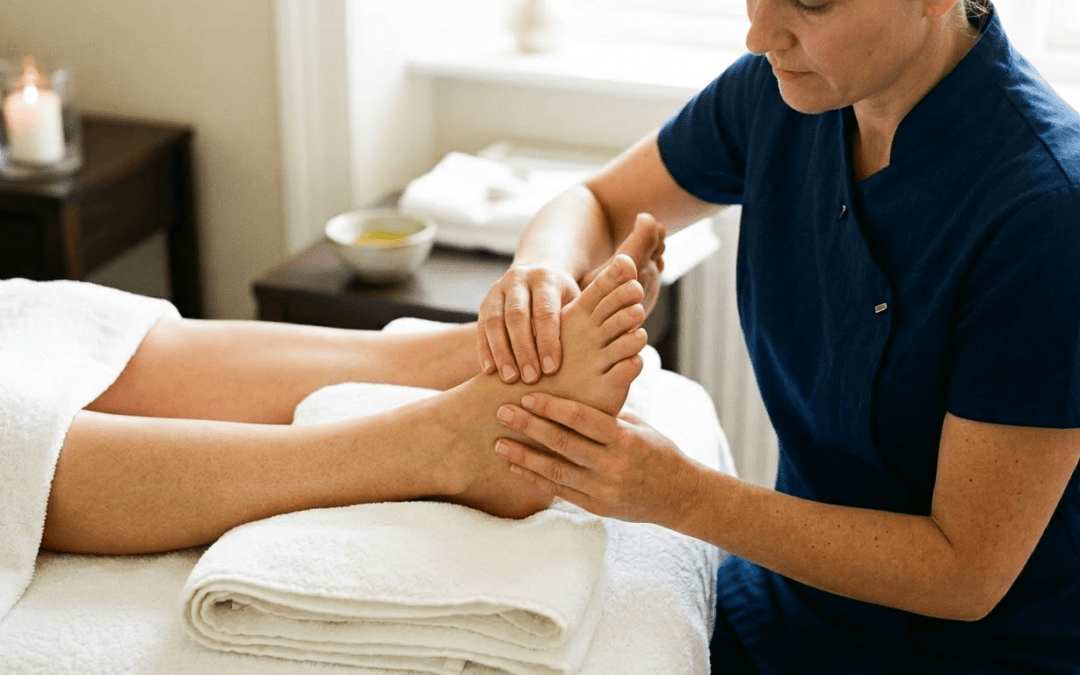
Your feet contain reflex points that correspond to every part of your body, including your lymphatic system. When a trained reflexologist applies pressure to these specific areas, it’s like pressing a reset button for your lymph flow.
The main lymphatic reflexology points on your feet include:
1. The webbing between your toes – These areas correspond to the lymph nodes in your upper body, including those in your neck and armpits.
2. The top of your foot – This zone connects to the lymphatic drainage of your chest and breast area.
3. The ankle area – Both inner and outer ankle points relate to the lymph nodes in your groin and pelvic region.
4. The arch of your foot – This area corresponds to your abdominal lymph nodes and can help with digestive-related toxin removal.
By stimulating these zones through gentle, rhythmic pressure, reflexology encourages lymph to move more efficiently through your system. This is particularly important during times when you need extra seasonal immune support through reflexology.
Your At-Home Lymphatic Reflexology Routine
While professional treatment offers the most comprehensive benefits, this simple routine can help maintain lymph flow between sessions:
Step 1: Prepare Your Feet (2 minutes)
- Soak feet in warm water with Epsom salts
- Pat dry and apply a small amount of natural oil
Step 2: Toe Work (3 minutes)
- Gently squeeze and rotate each toe
- Press into the webbing between toes using your thumb
- Work from big toe to little toe on both feet
Step 3: Top of Foot Drainage (3 minutes)
- Use your thumbs to make small circles along the top of your foot
- Start near your toes and work toward your ankle
- Apply gentle, consistent pressure
Step 4: Ankle Circles (2 minutes)
- Make small circular movements around both ankle bones
- Focus on any areas that feel tender or swollen
Step 5: Arch Support (2 minutes)
- Use your knuckles to gently press along your foot’s arch
- Move from heel to ball of foot in slow, deliberate strokes
When to Seek Professional Treatment
While self-care is valuable, a professional reflexologist can provide deeper, more targeted work. They can identify subtle imbalances and apply techniques that go beyond what’s possible at home. Professional reflexology is especially beneficial when you’re feeling run down, dealing with chronic swelling, or simply want to optimize your body’s natural detox systems.
Recent research on reflexology and immunity shows that regular professional treatments can significantly enhance lymphatic function and overall immune response. Ready to experience the difference? Call Sonia today for your free 15-minute consultation and discover how reflexology can support your body’s natural cleansing processes.