The Hidden Connection Between Your Feet and Back
Have you ever wondered why that nagging lower back pain just won’t go away, despite trying everything? Here’s something fascinating: the answer might literally be at your feet.
Think of your feet as a detailed map of your entire body. Just as pressing a specific app on your phone opens a particular function, stimulating certain points on your feet can communicate directly with your lower back and sciatic nerve. This isn’t mystical thinking—it’s reflexology, a practice that’s been helping people find natural pain relief for thousands of years.
For those of us dealing with chronic lower back pain or the shooting discomfort of sciatica, reflexology offers a gentle, non-invasive approach that works with your body’s natural healing abilities. And the best part? You might feel the difference from your very first session.
Understanding Your Lower Back and Sciatic Reflex Zones
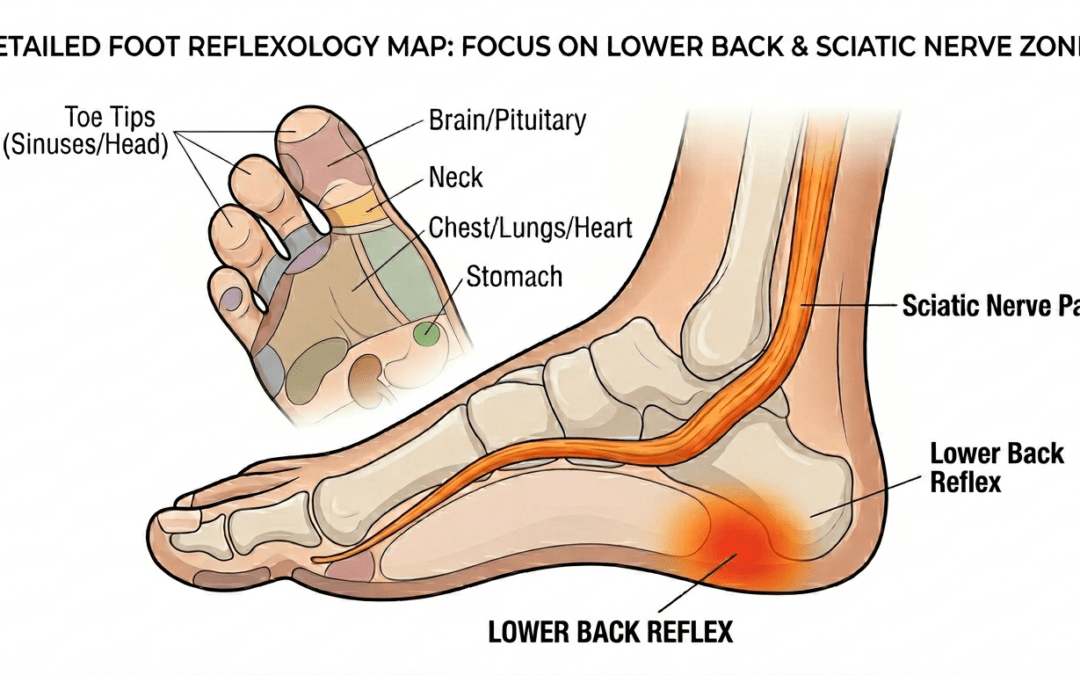
Your lower back’s reflex points run along the inner edge of both feet, following the arch from about halfway down to just before your heel. Picture this area as a miniature version of your spine—each small section corresponds to a specific vertebra in your lumbar region. When I work on these areas during a session, I’m essentially having a conversation with your lower back through your feet.
The sciatic nerve reflex is equally fascinating. It traces a path from behind your ankle bone, curves under your heel, and extends along the outer edge of your foot. When this area feels tender or “crunchy” under pressure, it often indicates tension or inflammation along your actual sciatic nerve pathway.
What makes this approach so effective? By applying gentle, specific pressure to these reflex zones, we’re encouraging:
- Improved blood flow to affected areas
- Release of muscle tension patterns
- Natural pain-relieving responses from your nervous system
- Better energy flow throughout your spine
This is precisely why reflexology forms such an important part of a comprehensive guide to reflexology pain relief.
What Happens During a Lower Back Reflexology Session
Walking into your first session, you might feel a mix of hope and skepticism—that’s completely normal. Here’s what actually happens when we focus on your lower back concerns.
After discussing your specific pain patterns, you’ll relax in a comfortable massage table while I begin with gentle foot relaxation techniques. As I work along your spinal reflex zones, you might notice:
- Tender spots that correspond to your areas of back pain
- A warming sensation as circulation increases
- Emotional release—it’s not uncommon to feel suddenly relaxed or even emotional
- Referred sensations in your actual lower back as the reflex points are stimulated
I always work within your comfort level, adjusting pressure based on your feedback. Remember, reflexology complements your existing healthcare—it doesn’t replace medical treatment for serious conditions. Many of my clients find it works beautifully alongside physiotherapy or chiropractic care.
Essential Stretches to Enhance Your Reflexology Results
The magic doesn’t stop when you leave my treatment room. These simple stretches can help maintain and enhance the benefits of your reflexology session:
1. Knee-to-Chest Stretch (hold 20 seconds each side) Lying on your back, gently pull one knee toward your chest while keeping the other leg straight. This releases lower back tension and mimics the decompression effect of reflexology.
2. Gentle Spinal Twist (hold 30 seconds each side) While seated, cross one leg over the other and twist gently toward the crossed leg. This helps maintain the improved energy flow initiated during your session.
3. Cat-Cow Stretch (repeat 10 times) On hands and knees, alternate between arching and rounding your spine. This movement keeps your spine flexible and enhances the circulation boost from reflexology.
4. Child’s Pose (hold 1-2 minutes) This restorative position allows your lower back to fully relax, extending the calming effects of your treatment.
These stretches work synergistically with reflexology, much like our neck and shoulder pain relief techniques complement each other for comprehensive upper body relief.
Creating Your Path to Lasting Relief
Real, lasting relief from lower back pain and sciatica rarely happens overnight—it’s a journey, and reflexology can be your trusted companion along the way.
Most clients experiencing chronic lower back issues benefit from weekly sessions initially, then spacing them out as symptoms improve. Between sessions, staying hydrated helps flush out toxins released during treatment, while gentle daily movement keeps energy flowing freely.
Remember: If your pain is severe, sudden, or accompanied by numbness or weakness, always consult your doctor first. Reflexology works best as part of an integrated approach to wellness.
Ready to take the first step toward a pain-free back? Sometimes the path to relief starts with a simple phone call. Why not book a free 15-minute consultation to discuss how reflexology might help your specific situation?
Curious about how reflexology can help with other types of pain? Discover how these same principles apply to migraine and headache relief points.