
Have you ever noticed how a simple foot rub can make your whole body relax? There’s a reason your feet hold such power over your sleep—and tonight, you’re going to discover exactly how to harness it.
Picture this: It’s 10 PM, and instead of scrolling through your phone or tossing and turning, you’re giving yourself a gentle foot massage that signals to your entire nervous system that it’s time to wind down. This isn’t just any massage—it’s a targeted reflexology routine designed to activate specific sleep-inducing points on your feet.
Preparing Your Sleep Sanctuary
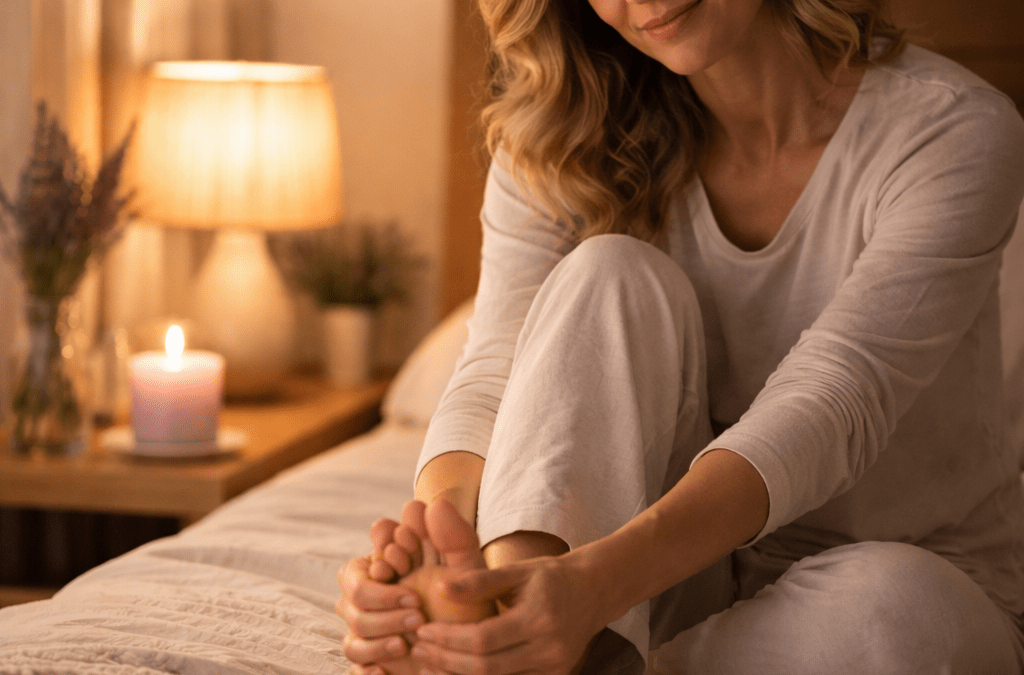
Before we dive into the magic of reflexology points, let’s set the stage for success. Your bedroom should feel like a cocoon of calm. Dim the lights, perhaps light a lavender candle, and grab a comfortable pillow to prop under your knees.
You’ll need just three things: clean hands, a small amount of unscented lotion or oil, and 10 minutes of uninterrupted time. Sit comfortably on your bed with one foot resting on the opposite thigh—this position gives you easy access to all the reflexology points while understanding how reflexology affects your circadian rhythm.
Think of this preparation as a ritual. Just as you brush your teeth every night, this routine can become a signal to your body that sleep is approaching.
The 10-Minute Bedtime Sequence
Now for the transformative part—your step-by-step guide to better sleep through your feet.
Minutes 1-2: The Welcoming Touch Start by holding your entire foot with both hands, taking three deep breaths. This simple beginning tells your nervous system that it’s safe to relax. Gently rotate your ankle three times in each direction, releasing the day’s tension.
Minutes 3-4: The Solar Plexus Point Find the center of your foot, just below the ball of the foot, between the second and the third toe. This is your solar plexus reflex—your body’s stress headquarters. Using your thumb, apply gentle circular pressure here for 30 seconds. You might feel warmth spreading through your chest as anxiety melts away. Repeat on the other foot.
Minutes 5-6: The Pineal Gland Connection Your big toe holds a secret—it’s connected to your pineal gland, which produces melatonin. Gently squeeze and roll your big toe between your thumb and index finger, spending extra time on the very tip. This stimulation can naturally boost your sleep hormone production.
Minutes 7-8: The Spine Wind-Down Run your thumb along the inside edge of your foot, from heel to big toe. This mirrors your spine and helps release physical tension you’ve been carrying. Use slow, firm strokes, imagining each vertebra relaxing as you go.
Minutes 9-10: The Finishing Flow End with what I call “the sleepy sweep”—long, flowing strokes from your toes to your heel, using both hands. This integrates all the work you’ve done and sends a final message of relaxation through your entire body. Finish by holding both feet gently and taking three more deep breaths.
Maximizing Your Results
The beauty of this routine lies in its consistency. Like training for a marathon, your body learns to respond more quickly with practice. Keep a sleep journal next to your bed and note how you feel after each session.
Pro tip: If your mind is particularly busy, combine this routine with the 4-7-8 breathing technique. Some clients find that pairing reflexology with latest research on reflexology and sleep helps them understand why it works so effectively.
When to Seek Professional Support
While this self-care routine can work wonders, sometimes your feet are telling a deeper story. If you’re still struggling with sleep after two weeks of consistent practice, or if you notice tender spots that don’t improve, it might be time for professional reflexology.
A trained reflexologist can identify imbalances you might miss and provide targeted treatment that goes beyond self-care. They can also teach you personalized techniques based on your unique sleep challenges.
Ready to explore how reflexology can transform your sleep even further? Discover our comprehensive guide to reflexology for sleep and insomnia and learn why so many people in Ireland are turning to this gentle, natural approach for better rest. Sweet dreams start with happy feet—and now you know exactly how to achieve both.