Ever wondered if there’s actual science behind those claims about reflexology helping with sleep? You’re not alone. While counting sheep might be the traditional remedy, researchers have been quietly investigating whether working specific points on the feet could genuinely shift the way you sleep at night.
If you’ve been tossing and turning, wrestling with racing thoughts, or waking up feeling like you’ve run a marathon, you might be surprised—and reassured—by what the studies actually reveal. The honest picture is more nuanced than the enthusiastic headlines, but it’s also more interesting.
The Science Behind Reflexology and Sleep
Here’s where it gets genuinely fascinating. When a reflexologist works specific points on your feet, they’re not just providing pleasant sensations. Research suggests they’re triggering measurable changes in your autonomic nervous system, gently shifting your body from “fight or flight” mode into “rest and digest” mode—the state your body needs in order to sleep well.
The feet are densely packed with nerve endings, and the soles in particular are highly sensitive areas mapped onto large regions of the somatosensory cortex. When these areas are stimulated through sustained, structured pressure, the body’s parasympathetic response tends to activate: heart rate slows, blood pressure drops, and subjective stress measurably decreases. Some studies have also recorded reductions in salivary cortisol after reflexology sessions, although the evidence on this specific marker is mixed and varies by population.
What’s particularly intriguing is how this connects to your sleep and circadian rhythm connection. By calming an overactive nervous system, reflexology may help your body settle into a more natural rhythm of winding down in the evening.
Key Research Findings
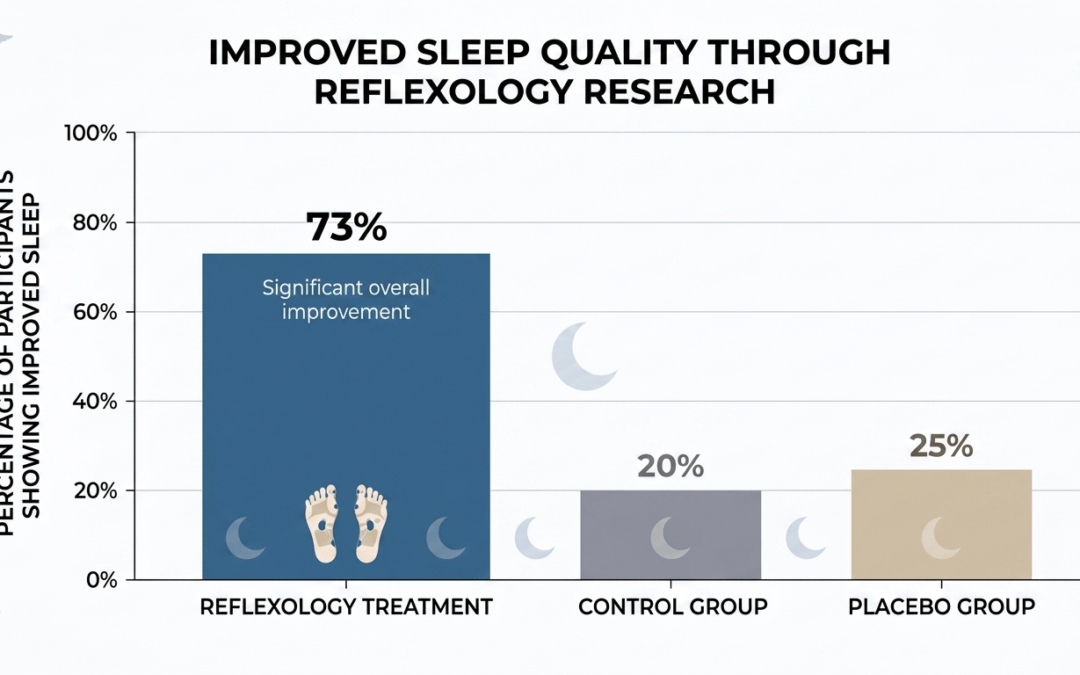
So what do the studies actually tell us? The most robust evidence comes from a 2021 systematic review and meta-analysis published in the Journal of Advanced Nursing. The researchers analysed 42 randomised controlled trials covering 3,928 participants and found that foot reflexology produced significantly greater reductions in sleep quality scores compared with controls (Hedges’ g = -1.37; 95% CI = -1.81 to -0.94), and that participants receiving reflexology were less likely to experience sleep problems than those in control groups. That’s a meaningful effect size across a substantial body of research.
An earlier meta-analysis from 2011, published in the Journal of Korean Academy of Nursing, reached similar conclusions. The authors reviewed 44 studies (18 of which examined sleep specifically) and concluded that foot reflexology is a useful nursing intervention to relieve fatigue and to promote sleep.
For a more direct look at what reflexology does to the brain during sleep, a small Spanish polysomnography study from 2017 monitored 12 healthy adults during 35-minute reflexology sessions. Nine of the participants moved into N1 and N2 sleep stages and remained there between 4 and 25.5 minutes, suggesting that reflexology induces a gradual, orderly progression from wakefulness into sleep. The sample was small, but the finding is biologically plausible: reflexology appears to actively help the brain shift gears toward sleep.
For people whose sleep is disrupted by chronic illness, the evidence is also encouraging. A 2018 randomised controlled trial of 60 rheumatoid arthritis patients found that six weeks of foot reflexology not only reduced pain but also significantly improved Pittsburgh Sleep Quality Index scores compared with controls.
What stands out across this body of research isn’t a single dramatic statistic—it’s the consistency of the direction of effect across very different patient groups: hemodialysis patients, ICU patients, post-surgical recovery, hypertension, menopause, leukaemia patients. Across all of them, reflexology tends to gently improve sleep.
What This Means for You
So what do these findings mean for your own bedroom? If stress is your nighttime nemesis—the kind that makes your mind race the moment your head hits the pillow—the research suggests reflexology may be a particularly good fit. The mechanism that’s most consistently demonstrated isn’t a magic intervention in any specific sleep stage, but rather a reliable downshift in nervous system arousal: less tension in the body, slower breathing, a quieter mind.
Unlike sleep medications, which can leave you groggy and alter sleep architecture in unhelpful ways, reflexology works alongside your body’s natural sleep mechanisms rather than overriding them. Many participants in these studies reported feeling naturally tired at bedtime and waking more refreshed in the morning, with no withdrawal effects when sessions ended.
For those dealing with physical sleep disruptors such as breathing-related disorders, the research is more limited and more honest about its limits. There’s emerging evidence that reflexology may help improve subjective sleep quality and quality of life in people at high risk for obstructive sleep apnoea, though it’s not a substitute for medical treatments such as CPAP. If you’d like to understand more about this specific area, our page on sleep apnoea and breathing patterns goes into more detail.
Taking the Next Step
The research paints a genuinely encouraging picture, but it’s worth keeping perspective: every sleep story is unique. What works gently and consistently for many people in studies might work differently for you. The good news is that reflexology is non-invasive, has an excellent safety profile, and can sit comfortably alongside other strategies you may already be using.
If you’re curious about experiencing these benefits, consider starting with a conversation about your specific sleep challenges. Whether you’re navigating stress-induced insomnia or simply want to enhance your overall sleep quality, understanding the science is just the beginning—the real value comes from building a regular practice that works with your body over time.
Ready to explore more about how reflexology could support your nights? Discover our comprehensive guide to reflexology for sleep and take the first step toward the restful sleep you deserve. Call today for your free 15-minute consultation!