
Your Internal Clock is More Than Just Habit
Ever wondered why you wake up at 3am every night, even without an alarm? Or why jet lag hits you like a ton of bricks? Here’s what makes this fascinating: your body runs on an ancient timekeeper that’s far more sophisticated than any watch. This internal clock, known as your circadian rhythm, orchestrates a complex dance of hormones that tells every cell in your body when to wake, sleep, digest, and repair.
But what if I told you that specific points on your feet could help reset this master clock when it goes haywire? That’s where reflexology for sleep and insomnia comes in—not as a quick fix, but as a profound way to communicate with your body’s deepest rhythms.
Understanding Your Body’s Master Clock
Think of your circadian rhythm as the conductor of a grand orchestra. Just as a conductor ensures the violins don’t play during the drum solo, your internal clock coordinates when different hormones take center stage throughout your day.
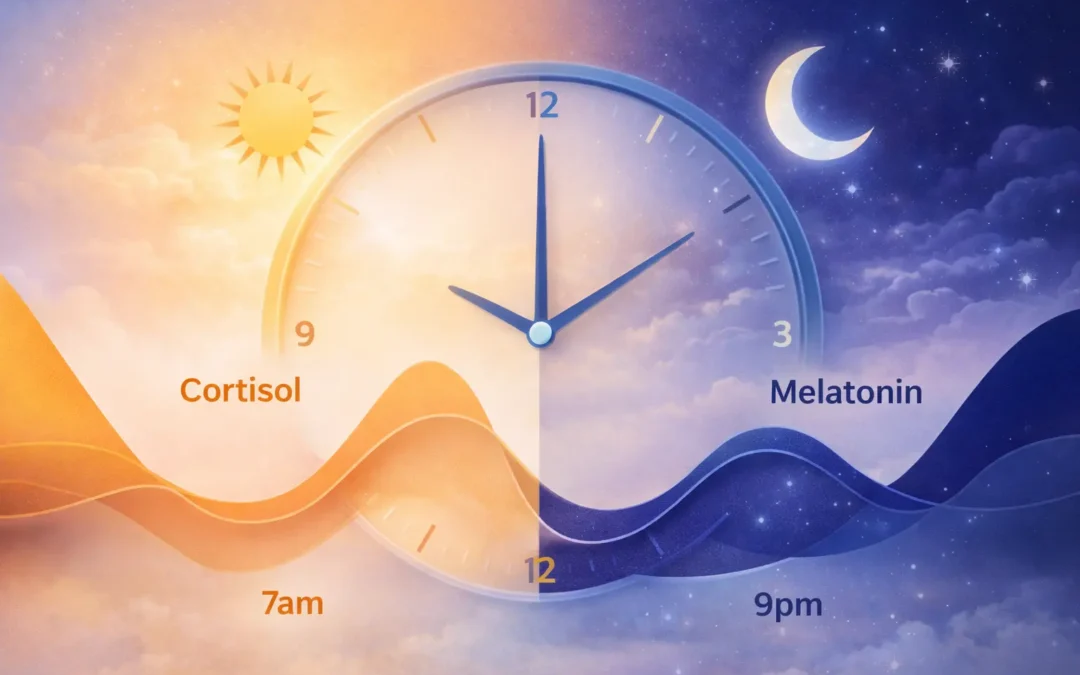
The two main players in this hormonal symphony are melatonin (your sleep hormone) and cortisol (your wake-up hormone). In a healthy rhythm, cortisol peaks around 7am, giving you that natural morning energy. As daylight fades, melatonin begins its gentle rise, preparing your body for restorative sleep by 10pm.
But here’s where modern life throws a wrench in the works. Blue light from screens, irregular meal times, shift work, and chronic stress can throw this delicate balance into chaos. Your conductor gets confused, playing the wake-up music at bedtime and the lullabies at dawn. Sound familiar?
The Reflexology Connection: Mapping Sleep Hormones to Your Feet
This is where reflexology reveals its remarkable wisdom. Your feet contain specific reflex zones that correspond to the very glands responsible for your circadian rhythm. Let me walk you through these fascinating connections:
The Pineal Gland Reflex (Big Toe) Located at the center of your big toe tip, this tiny point connects to your brain’s pineal gland—the melatonin factory. Gentle circular pressure here can stimulate natural melatonin production, especially effective when applied in the evening.
The Hypothalamus Zone (Inside Edge of Big Toe) This master regulator sits along the inside edge of your big toe. The hypothalamus acts like your body’s thermostat, controlling not just temperature but also hunger, thirst, and crucially, your sleep-wake cycle.
The Adrenal Reflexes (Middle of Foot) Found in the soft area below the ball of your foot at the height of the big toe, these points influence cortisol production. Morning stimulation here can enhance natural awakening, while evening work focuses on calming these stress-response centers.
What makes this approach unique is how reflexology works with your body’s natural intelligence rather than overriding it. Each pressure point sends signals through your nervous system, gently reminding your glands of their natural rhythm.
Simple Techniques to Reset Your Rhythm
While professional treatment offers the deepest benefits, you can start supporting your circadian rhythm today with these simple techniques:
Morning Wake-Up Routine: Spend 2-3 minutes applying firm, circular pressure to your adrenal reflex points. This naturally encourages healthy cortisol production for daytime energy.
Evening Wind-Down: Focus on gentle, slow circles on your big toe tips (pineal reflex) for 5 minutes before bed. Many clients report feeling drowsy even during this simple practice.
For a complete bedtime reflexology routine, combining these points with other sleep-promoting reflexes can transform your evening ritual into a powerful signal for deep rest.
When to Seek Professional Help
While self-care techniques offer wonderful support, certain signs indicate it’s time for professional reflexology treatment:
- Waking at the same time nightly for over two weeks
- Difficulty falling asleep despite exhaustion
- Afternoon energy crashes affecting daily life
- Shift work or frequent travel disrupting your rhythm
As professional reflexologists, we can perform detailed assessments, identifying which specific hormonal reflexes need attention and creating personalized treatment plans. The research and evidence supporting reflexology for circadian rhythm regulation continues to grow, offering hope for those who’ve tried everything else.
Ready to explore how reflexology could help reset your body clock? Call to book a session and let’s work together to restore your natural sleep-wake rhythm.